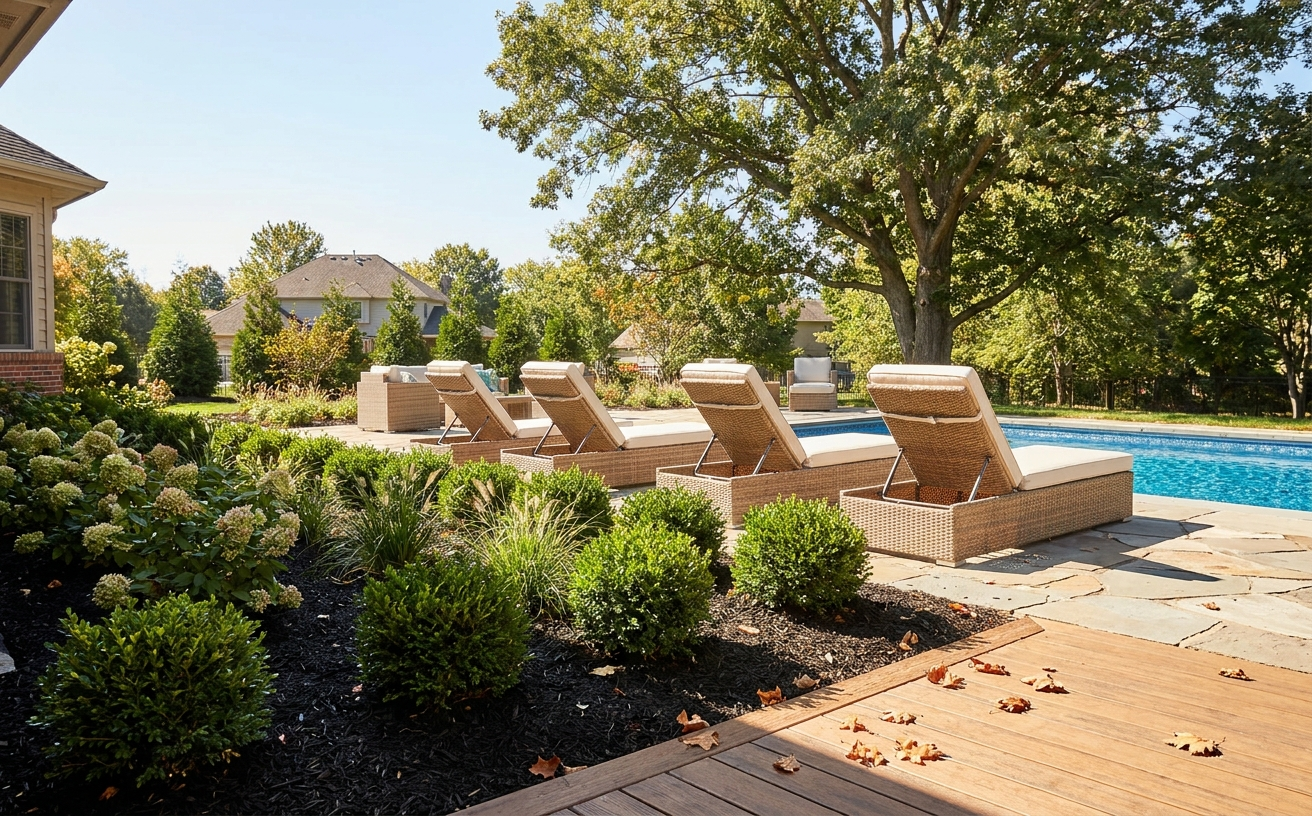
A good landscaping day can make the whole backyard feel new. The hedges are trimmed. Fresh mulch is down. Flower beds look sharper. Tree branches are cleared. The lawn edges look clean. From the kitchen window, everything seems more polished.
Then you step outside and notice the other side of the project.
Tiny leaves are on the patio. Mulch dust sits near the pool edge. A few grass clippings made their way onto the steps. Patio chairs are not where they belong. A hose was moved and never coiled back. The pool may still look inviting, but the area around it feels like it has been through a workday.
This is normal.
Landscaping improves the yard, but it also disturbs it. A poolside reset after yard work helps turn the space from “freshly worked on” to “ready to enjoy.”
The reset does not need to be complicated. It just needs to happen in the right order.
Wait for the Yard Work to Fully End
Do not start cleaning the pool area while landscaping work is still happening. It is tempting to pick up leaves or wipe tables early, but more debris will likely follow.
Wait until the crew is gone or the work is fully finished.
Then walk the entire backyard once. Look at the pool, patio, planted areas, lawn edges, side gate, and outdoor furniture.
The first walkthrough should be observational, not active.
Notice where the mess is coming from. Is it mulch dust? Grass clippings? trimmed leaves? sawdust from tree work? soil near the patio? The type of debris determines the reset.
A rushed cleanup can spread the mess instead of removing it.
Start Away From the Water
After landscaping, begin with the outer areas first. Clean from the yard toward the pool, not the other way around.
If you clear the pool first but leave loose debris on the patio, wind and foot traffic may push that debris right back toward the water.
Start with garden beds, walking paths, lawn edges, and furniture zones. Move loose branches. collect plant tags or plastic ties. Check whether mulch spilled onto pavers. Return planters or chairs that were moved.
This outer reset protects the pool.
It also helps the whole backyard feel orderly before you focus on the water.
Think of it as working from the rough edge toward the clean center.
Check the Mulch Line
Fresh mulch looks great, but it can travel. Small pieces may land on the pool deck, especially if the beds are close to the water.
Walk the mulch line slowly.
Look for loose pieces on the patio, steps, and coping. Sweep them away from the pool, not toward it. If mulch sits too close to a high-traffic edge, consider pulling it back slightly or adding a cleaner border.
This is especially useful in yards where kids, dogs, or guests move between planting beds and pool chairs.
Mulch belongs in the beds, not under bare feet near the water.
A clean edge makes the landscaping look more intentional.
Bring Furniture Back to Human Use
Landscaping crews often move chairs, side tables, umbrellas, planters, hoses, or storage bins to complete their work. Once the job is done, those items may sit in slightly awkward places.
Reset the furniture based on how people actually use the pool.
Put chairs back where they have shade or a good view. Move side tables within reach. Keep walkways clear. Make sure umbrellas are stable. Return outdoor cushions only after dust and debris are handled.
Do not rush this step.
Furniture placement decides whether the backyard feels like a work zone or a living space again.
A pool area becomes usable when seating makes sense.
Divide the Recovery Into Two Layers
A landscaping-day reset works best in two layers.
The first layer is the yard layer. This includes clippings, mulch, dust, tools, walkways, planters, and patio furniture.
The second layer is the pool layer. This includes visible debris, steps, waterline, toys, towels, and the overall pool view.
If your home planning notes include outdoor routines and pool resources, a swimming pool robotic cleaner may sit in the pool layer of that system, alongside reminders for skimming visible debris, checking steps, and keeping maintenance tools out of the main patio view.
This separation helps you stay focused.
You are not trying to fix everything at once. You are moving from yard recovery to pool readiness.
Wipe Before You Set Anything Down
After trimming, mowing, or mulching, patio surfaces can hold fine dust. If you place clean towels, snacks, books, or drinks on those surfaces too soon, the dust becomes part of everything.
Wipe tables, chair arms, benches, and outdoor counters before using them.
This is a small step, but it changes the feel of the space quickly.
A clean table makes the backyard feel ready again. A dusty table makes the whole area feel unfinished, even if the landscaping looks beautiful.
Use a damp cloth if needed.
Dry wiping can sometimes move dust around instead of removing it.
Watch for Irrigation Changes
Landscaping work may affect sprinklers, drip lines, or drainage patterns. After the work is done, check whether water is spraying where it should.
This matters near pools.
A sprinkler that now hits the patio can create wet spots and dirt movement. A shifted drip line may wash mulch toward the deck. A new plant bed may change how water moves after rain.
You do not need to become an irrigation expert.
Just notice what changed.
If something seems off, mark it for follow-up before it becomes part of the new normal.
Keep Yard Tools Out of the Pool View
After outdoor work, tools can linger. A rake near the fence. A blower by the door. gloves on a table. a hose stretched across the patio.
Put them away before considering the reset complete.
Tools left in view make the yard feel like a project, not a place to relax.
This is especially true around a pool. The water may look clean, but if the surrounding view is full of work items, the whole space feels unfinished.
A backyard reset is partly about function and partly about mood.
Tools belong in storage when the work is done.
Give the Pool Steps Extra Attention
Pool steps often collect the evidence of a landscaping day. Small leaves, mulch bits, grass clippings, or dust may gather there because steps interrupt water flow and catch what moves across the surface.
Check them closely.
Even if the rest of the pool looks fine, messy steps can make the pool feel less inviting. They are also one of the first things people notice before getting in.
A quick step check can do more for the look of the pool than a long general cleanup.
Focus where eyes and feet go first.
Let the Yard Settle Before Hosting
Fresh landscaping sometimes needs a day to settle. Mulch may still be loose. soil may still be soft. trimmed plants may drop a few more leaves. the patio may need one more light sweep after the wind moves through.
If possible, wait a day before hosting a larger pool gathering.
If guests are coming the same day, keep the setup simple. Use clear walkways, shaded seating, and one clean table. Avoid placing chairs too close to fresh beds or soft lawn areas.
The yard can look beautiful and still be slightly vulnerable after work.
Give it a little time.
Take a Before-and-After Photo
A landscaping day is a good time to update your backyard photo log. Take one photo after the work is done but before the final reset. Then take another after the pool area is clean and furniture is back in place.
This helps you see the full improvement.
It also records what changed in case you need to reference it later for seasonal planning, plant care, or future projects.
Photos can reveal details you may miss in person.
They also make the effort feel more satisfying.
Do a Light Check the Next Morning
The next morning often tells you whether the reset worked. Wind may move leftover debris. sprinklers may reveal a problem. mulch may shift. small clippings may appear near the waterline again.
Walk the backyard once more.
Do not start over. Just make small corrections.
This second check is usually faster and easier than the first reset.
It turns the landscaping project into a fully finished outdoor space.
A Finished Yard Should Feel Usable
Landscaping is not complete when the plants look better. It is complete when the backyard feels usable again.
The pool deck should be clear. The furniture should make sense. Tools should be stored. mulch should stay where it belongs. the water view should feel calm. walking paths should be easy.
A poolside reset after landscaping protects the work that was just done.
It also helps the family enjoy the improvement sooner.
A beautiful yard should not feel like a construction site. With a thoughtful reset, it can move quickly from “freshly worked on” to “ready for coffee, swimming, dinner, and everyday life.”
That is when the project really starts to pay off.