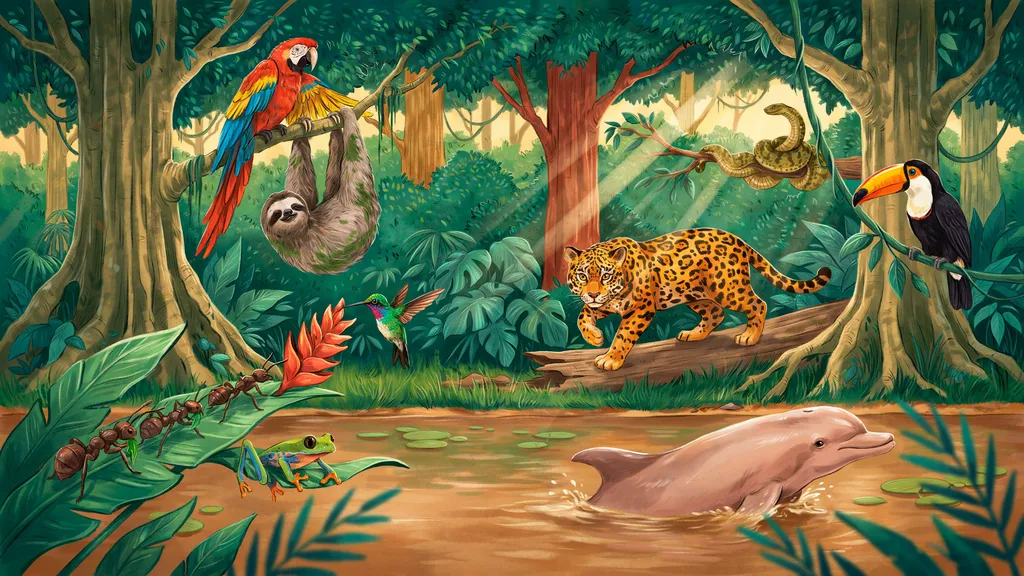
Welcome to the wildest and greenest home on planet Earth! Have you ever wondered what it feels like to step inside a giant, living green room? The Brazilian Amazon Rainforest is a magical place full of tall trees, bright flowers, and lots of amazing noises. When you walk through the trees, you can hear birds singing and leaves rustling. This giant jungle is home to thousands of creatures. Some of them are tiny like ants, and others are big and strong like jaguars. Today, we are going on a fun adventure to meet the incredible Brazilian Amazon Rainforest animals. You will see colorful birds, slow-moving mammals, and sneaky river swimmers. Let us jump right in and discover who lives in this green wonderland!
Meet the Mighty Jaguar
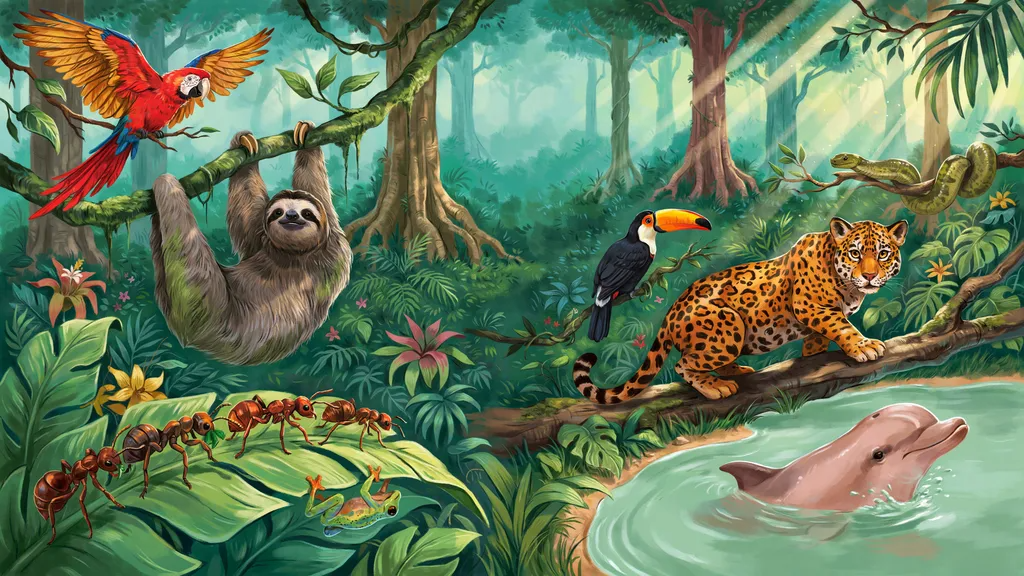
The jaguar is the king of the jungle floor in South America. Earning respect with its strong paws and spots, this big cat loves the wet weather of the jungle. It is an amazing swimmer, unlike most house cats that hate water. Jaguars use rivers to travel and hunt for food. They have a very strong bite, which helps them catch their meals safely. Seeing a jaguar in the wild is rare because they like to hide. They wear golden coats with dark spots called rosettes. These spots help them blend into the shadows of the trees and bushes. Protecting these big cats means keeping their big forest home safe and clean.
Slow and Steady Three-Toed Sloths
Hanging out high up in the green canopy, the sloth is the champion of taking it easy. These cute mammals move so slowly that green algae sometimes grow on their fur. This green color acts like a natural superhero cape, helping them hide from hungry eagles and jaguars. Sloths spend almost their whole lives in the branches. They munch on tender leaves, buds, and twigs. Because food does not give them a lot of energy, they sleep for many hours a day. Their curved claws work like built-in hooks, letting them hang upside down without getting tired. Watching a sloth move is like watching a slow-motion movie in real life.
Colorful Macaws Painting the Sky
If you look up at the bright blue sky above the trees, you might see a flash of red, yellow, and blue. Those are scarlet macaws flying together in noisy pairs. These large, smart parrots have loud voices that echo through the thick trees. They use their strong, curved beaks like a tool to crack open hard nuts and seeds. Macaws mate for life, which means they stay with the same partner for many years. Seeing them fly across the bright sunshine is a breathtaking sight. Their bright feathers help them spot each other in the deep green forest. They bring so much cheerful color and loud joy to their tropical home.
The Giant River Dolphin or Boto
Down in the muddy, winding rivers of the basin swims a very special creature. The pink river dolphin, also known as the boto, has a bright pink skin color. Unlike gray ocean dolphins, these freshwater swimmers have flexible necks that let them turn their heads side to side. This helps them steer around tree trunks when the rainy season floods the forest floor. Local stories say these friendly creatures possess magical powers, but E-E-A-T research shows they are just super smart animals. They eat tasty fish and use clicking sounds to talk to their friends underwater. Spotting a pink head pop out of the river is a true treat for lucky travelers.
Tiny and Bright Poison Dart Frogs
Do not let their pretty colors fool you! Poison dart frogs are tiny jewels sitting on wet green leaves. Some are bright yellow, shiny blue, or glowing red. Their flashy colors send a clear warning message to hungry animals: do not eat me, I taste bad and am dangerous. These little hoppers get their special defense from the bugs they eat on the forest floor. Scientists study these amazing skin toxins, showing real expertise in how nature keeps small creatures safe. Indigenous tribes once used the helpful secretions for hunting. Even though they are small, their bright style makes them famous stars of the tropical woods.
The Sneaky Green Anaconda
Slithering quietly through swampy waters and muddy banks, the green anaconda is a true giant. This heavy snake does not have any poison. Instead, it wraps its long, strong body around its meal to squeeze tightly. Anacondas love spending time in shallow water where they can hide their big bodies easily. They can hold their breath underwater for a surprisingly long time while waiting for dinner to swim past. People often feel scared of snakes, but anacondas mostly want to be left alone in the quiet wetlands. Their dark green and black patterns help them blend right into floating plants and lily pads.
Clever Capybaras, the Giant Rodents
Imagine a guinea pig the size of a large dog! That is a capybara, the biggest rodent in the whole wide world. These chill animals have webbed feet and love splashing around in rivers and muddy ponds. Capybaras are super friendly and often hang out with other jungle creatures, looking totally relaxed. They munch on fresh river grasses and aquatic plants all day long. When the sun gets too hot, they sink deep into the cool mud to protect their sensitive skin. Their calm faces always look like they are smiling. Meeting a family of capybaras relaxing by the water is a peaceful and fun experience.
The Hungry Giant Anteater
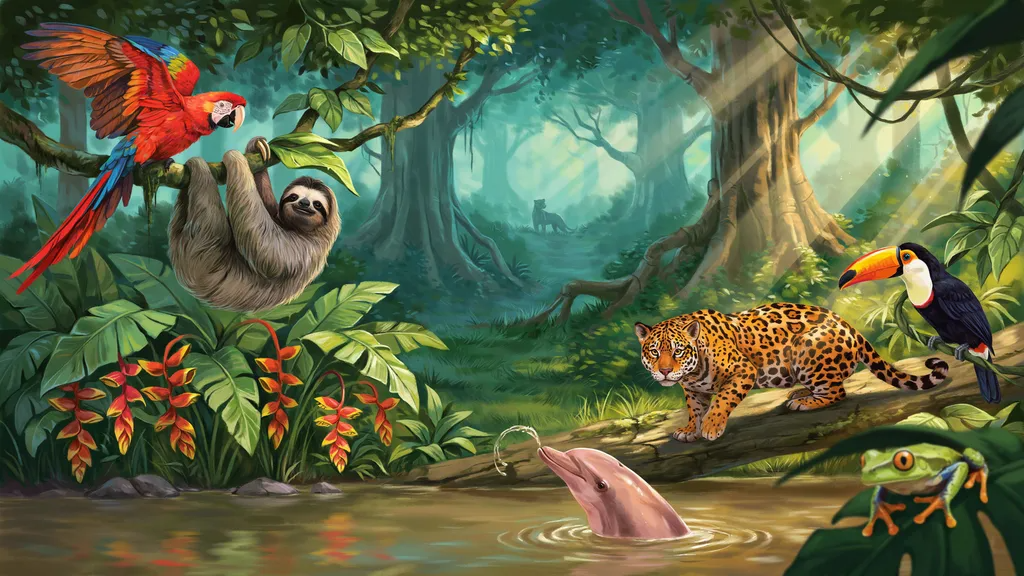
Trotting across the open grassy edges of the jungle comes a very strange-looking creature. The giant anteater has a long, skinny snout and a huge, bushy tail that looks like a feathery fan. It does not have any teeth at all. Instead, it uses a super long, sticky tongue to slurp up thousands of ants and termites every single day. Its sharp front claws dig open hard insect mounds with ease. Anteaters carry their babies right on their backs while walking through the tall brush. Their funny shape and helpful appetite keep the insect population balanced. They are truly one of the most unique mammals living in South America.
Fierce Harpy Eagles Watching from Above
Sitting high on the highest tree branches is one of the biggest birds of prey on Earth. The harpy eagle has dark gray feathers, a cool crown of head feathers, and massive talons. Their sharp claws are as big as a grizzly bear’s claws! These powerful hunters soar quietly through the upper layers of the trees looking for monkeys and sloths. Their large eyes and sharp ears help them spot tiny movements from very far away. Seeing a harpy eagle up close shows true authority in the skies. They need huge areas of healthy forest to hunt and raise their single fluffy chick safely.
Strange and Cute Tapirs
Waddling through the shady underbrush is the tapir, a gentle plant-eater with a funny little nose. Their flexible snout looks like a tiny trunk, perfect for grabbing leaves and sniffing the air. Tapirs look a bit like a mix between a pig and an elephant, but they are related to horses and rhinos! They love water and often take long, refreshing baths to cool down and wash away dirt. When danger comes, they run straight into deep rivers and stay submerged with just their nose sticking out. These shy creatures play a huge role in planting new trees by eating fruits and leaving seeds behind.
Comparison Table of Jungle Wildlife
| Animal Name | Favorite Food | Special Feature |
| Jaguar | Fish, deer, and small mammals | Excellent swimmer with a powerful bite |
| Three-Toed Sloth | Leaves and buds | Slow movement with green algae camouflage |
| Scarlet Macaw | Nuts and seeds | Bright feathers and strong, curved beaks |
| Pink River Dolphin | Fresh fish | Bright pink skin and flexible neck |
| Poison Dart Frog | Tiny insects | Bright warning colors on small skin |
| Green Anaconda | Fish, birds, and mammals | Huge body that squeezes its meals |
| Capybara | Grasses and water plants | Largest rodent in the world with webbed feet |
| Giant Anteater | Ants and termites | Long sticky tongue and zero teeth |
| Harpy Eagle | Monkeys and sloths | Massive talons as big as bear claws |
| Tapir | Leaves and fallen fruit | Flexible nose trunk and great swimming skills |
Frequently Asked Questions
What is the biggest animal in the South American jungle?
The tapir and the jaguar are among the largest land mammals, while the green Anaconda is the heaviest snake. The capybara holds the title for the largest living rodent on the planet.
Are jaguars good at swimming in rivers?
Yes! Jaguars love water and swim across wide rivers easily to hunt for food, unlike regular house cats.
Why are poison dart frogs so brightly colored?
Their bright colors act as a warning sign to tell other creatures that their skin is dangerous and tastes bad.
Do sloths ever come down to the ground?
Sloths only come down from the trees about once a week to go to the bathroom, staying safe high up in the branches the rest of the time.
What do pink river dolphins eat?
They eat fresh river fish, crabs, and small turtles found swimming in the muddy waters of the river basin.
How do giant anteaters eat without any teeth?
They use a long, sticky tongue that zips in and out of their skinny snout to catch thousands of tiny bugs.
Conclusion
Protecting our planet’s green treasures is super important for all these amazing creatures. When we learn fun facts about brazilian amazon rainforest animals, we start to care more about keeping their home safe and clean. Every single creature, from the tiny poison frog to the mighty jaguar, has a special job to keep the jungle healthy. You can help by sharing cool stories, learning more about nature, and supporting green earth projects. Let us keep exploring and appreciating the wild wonders of our wonderful world together!