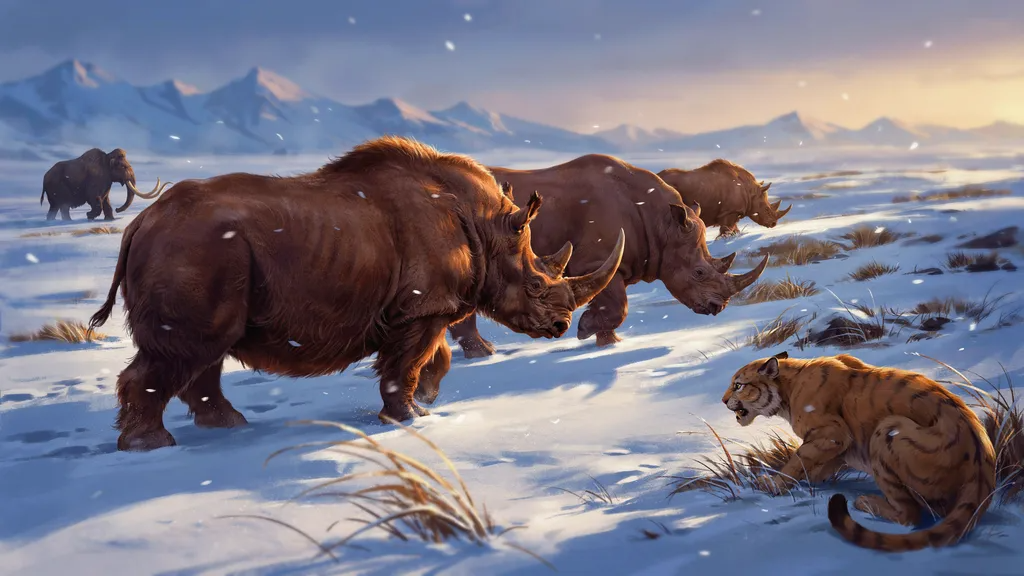
Imagine walking outside and seeing a rhino covered in thick, shaggy fur. That sounds like a cartoon, right? But long ago, this really happened! Millions of years ago, a super cool animal called the Hairy Rhinoceros walked the Earth. This special creature lived during a very chilly time called the Ice Age. It shared snowy lands with woolly mammoths and saber-toothed cats.
As someone who loves exploring ancient animal history, I always get so excited picturing these giant, furry beasts roaming the frosty plains. They were built like living tanks, but with a cozy winter coat. In this article, we are going to dive deep into the world of the hairy rhinoceros. We will look at how they lived, what they ate, and why they finally disappeared. Let us jump right in and explore this amazing Ice Age giant together!
What Was the Hairy Rhinoceros?
The hairy rhinoceros, or Coelodonta antiquitatis, was a massive mammal. It looked a lot like the rhinos we see in zoos today, but with a big twist. Instead of bare skin, it wore a thick coat of reddish-brown hair. This fur kept it warm when winter winds howled and snow covered the ground.
They were large and heavy. An adult could grow as big as a modern white rhino. They had short legs and a bulky body. Nature designed them to handle freezing cold weather with ease. Their thick hair acted like a heavy winter jacket. It proves how smart nature is at helping animals survive harsh places.
The Secret Behind the Shaggy Coat
How did this beast stay warm? The hairy rhinoceros had a two-layer coat. The outer layer had long, coarse guard hairs. Underneath that was a soft, dense layer of woolly fur. This special double coat trapped body heat and blocked freezing rain or snow.
Even their ears and tails were small. Small ears meant less skin exposed to the biting cold air. This kept them from losing too much body heat. Their furry look makes them one of the most unique creatures from long ago. It is like nature put a rhino inside a giant wool sweater!
Two Mighty Horns on the Face
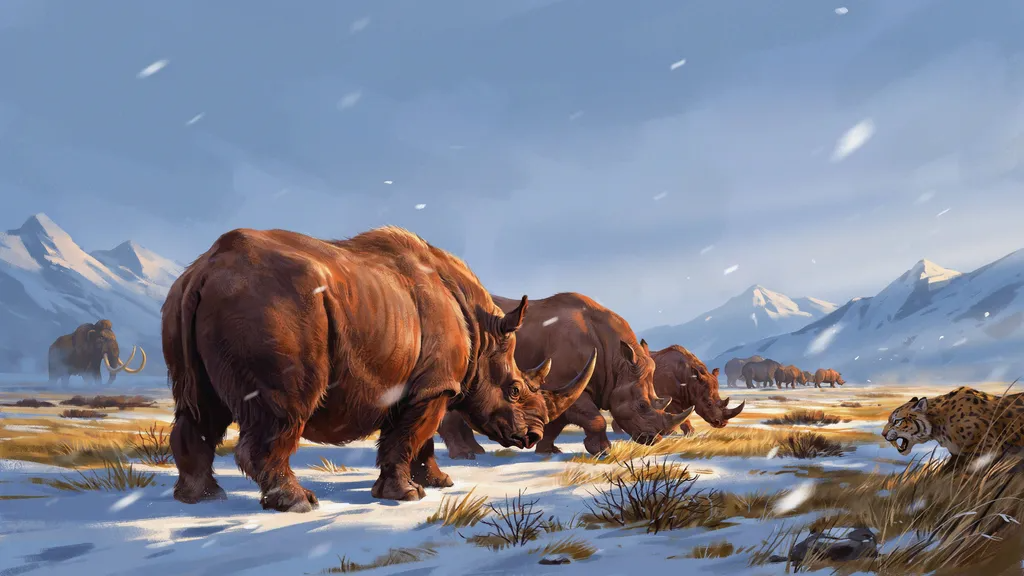
One of the coolest parts of the hairy rhinoceros was its facial structure. It had two big horns right on its nose. The front horn was the largest. It could grow quite long and curved backward.
Scientists think they used these long horns to sweep snow away. By pushing the snow aside, they could reach the tasty grass hiding underneath. The front horn often showed flat rub marks from scraping against frozen ground and rocks. It was not just for show; it was a handy tool for daily survival in a cold world.
What Did These Giants Eat?
You might wonder how such a big animal found food in a frozen wasteland. The hairy rhinoceros was a herbivore. That means it only ate plants. They loved munching on tough grasses, low shrubs, and small mosses.
Their wide, flat teeth were perfect for chewing tough vegetation. Because the land was cold and dry, tall trees were hard to find. So, they happily grazed on low ground plants. They spent a big part of their day eating just to keep their giant bodies strong and warm.
Where Did They Live?
The hairy rhinoceros loved the cold steppes of Eurasia. Their fossil bones have been found all across Europe and northern Asia. Countries like Siberia, Russia, and parts of the UK and France held these animals long ago.
The ground back then was hard, dry, and cold. It was like an open tundra. The hairy rhinoceros felt right at home in these wide, chilly plains. They did not like thick forests or warm swamps. They preferred the wide-open and breezy cold spaces.
Life During the Ice Age
Living in the Ice Age was tough. Blizzards roared, and rivers turned to solid ice. Yet, the hairy rhinoceros thrived in this chilly climate. They moved around in small groups or walked alone across the snowy valleys.
They shared their chilly home with huge woolly mammoths, giant deer, and fierce cave lions. While other animals struggled, the hairy rhinoceros used its great size and warm fur to stay safe. They were true rulers of the frozen landscape for thousands of years.
How Do We Know They Existed?
You might ask how we know so much about a furry rhino that is gone. We know because of amazing fossils! Sometimes, scientists find complete bones buried deep in the mud or frozen dirt.
In places like Siberia, the ground stays frozen all year. Because of this permafrost, scientists have even found real skin, hair, and horns of the hairy rhinoceros preserved in the ice! Finding these frozen pieces is like opening a time capsule. It lets us touch and see history right before our eyes.
Why Did the Hairy Rhinoceros Go Extinct?
Sadly, the hairy rhinoceros is no longer with us today. Around ten thousand years ago, the Earth started to get warmer. The big ice sheets began to melt. This event is called the end of the Ice Age.
As the weather warmed up, the plants they loved to eat changed. Thick forests started to grow where open grass fields used to be. Also, the climate became too warm for their thick, woolly coats. Combined with hunting by early humans, these changes made life too hard. Slowly, their numbers dropped until none were left.
Remembering the Ancient Beast
The story of the hairy rhinoceros teaches us a lot about our changing planet. It shows how animals adapt to wild weather and how fragile life can be when nature shifts too fast.
Today, we can see their bones in museums and imagine what they looked like. They remind us of a wild, frozen world that existed before our time. Learning about them makes our planet’s history feel so magical and grand.
Frequently Asked Questions
What is a hairy rhinoceros?
A hairy rhinoceros is an extinct mammal that lived during the Ice Age. It looked like a modern rhino but had a thick coat of fur to stay warm in the cold.
When did the hairy rhinoceros live?
They lived during the Pleistocene epoch, which is commonly known as the Ice Age. They roamed the Earth millions to thousands of years ago.
Why did the hairy rhinoceros have fur?
They had a thick, double-layered coat of hair to protect their bodies from freezing temperatures, wind, and snow in their tundra habitat.
What did the hairy rhinoceros eat?
They ate plants. Their diet mostly included tough grasses, low shrubs, and mosses found on the cold, open plains.
How big was a hairy rhinoceros?
They were very large and heavy, growing to a size similar to today’s modern white rhinoceros.
Why did the hairy rhinoceros go extinct?
They went extinct because the Earth’s climate warmed up at the end of the Ice Age. The plants changed, and they could no longer survive in the new environment.
Conclusion
The hairy rhinoceros is truly one of nature’s most fascinating creations. From their shaggy winter coats to their giant nose horns, these animals were perfectly made for the cold Ice Age. Even though they are gone now, their incredible story lives on through science and fossils.
What do you think it would be like to see a hairy rhinoceros in real life? Take a moment to share your thoughts or talk about your favorite Ice Age animal with a friend today!